
Loose skin is a common aesthetic concern that may develop on the face, neck, upper arms, abdomen, thighs or other body areas. It can occur because of natural ageing, pregnancy, significant weight loss, prolonged sun exposure or reduced collagen production. Although loose skin is generally not harmful, it may affect facial definition, body contours and confidence.
Modern aesthetic procedures can help improve mild to moderate skin laxity by supporting collagen production and enhancing firmness. However, treatment results depend on the severity of laxity, skin quality, age, treatment area and selected procedure.
At Hello Aesthetics Clinic, Dr. Kriti Singh provides personalised Loose Skin Treatment in Mohali after carefully evaluating each patient’s skin condition, medical history and expectations.
What Is Loose Skin?
The skin contains collagen and elastin, two essential proteins responsible for its strength, firmness and flexibility. Collagen supports the structure of the skin, while elastin helps it return to its original position after stretching.
As collagen and elastin production decreases, the skin may gradually become thinner and less firm. This can result in sagging around the cheeks, jawline, neck, abdomen, arms and thighs.
The severity of loose skin varies among individuals. While mild laxity may respond to non-surgical procedures, significant excess skin may require assessment by a qualified plastic surgeon.
Common Causes of Loose Skin
Understanding the cause of loose skin is important before selecting a treatment. Some of the most common causes include:
1. Natural Ageing
Collagen and elastin production gradually declines with age. Facial fat and bone structure may also change over time, making sagging around the cheeks, jawline and neck more noticeable.
2. Significant Weight Loss
When the body gains weight, the skin stretches to accommodate the increased volume. After significant weight loss, it may not contract completely, particularly when the excess weight was present for several years.
The amount of loose skin left behind depends on factors such as:
- Age
- Genetics
- Amount of weight lost
- Duration of excess weight
- Skin elasticity
- Lifestyle habits
The abdomen, upper arms, thighs and chest are commonly affected after substantial weight loss.
3. Pregnancy
The abdominal skin stretches during pregnancy. After childbirth, some women may experience reduced firmness or loose skin around the stomach.
Genetics, maternal age, number of pregnancies and changes in body weight can influence how well the skin contracts after delivery.
4. Prolonged Sun Exposure
Repeated exposure to ultraviolet radiation can damage collagen and accelerate visible skin ageing. Over time, this may contribute to wrinkles, pigmentation, uneven texture and reduced firmness.
5. Lifestyle and Genetic Factors
Genetics influence the skin’s natural thickness and elasticity. Smoking, inadequate nutrition, insufficient sleep and frequent fluctuations in body weight may also affect skin quality and contribute to premature ageing.
When Should You Consider Treatment?
A professional consultation may be helpful when loose skin starts affecting your appearance, facial definition, body contours or confidence. It is also useful when you are unsure whether the concern is caused by skin laxity, volume loss, excess fat or a combination of these factors.
Treatment may be considered for:
- Sagging around the cheeks or jawline
- Loose skin on the neck
- Reduced firmness on the upper arms
- Abdominal laxity after pregnancy
- Loose skin following weight loss
- Mild sagging on the thighs or knees
- Fine lines associated with reduced elasticity
- Uneven or crepey skin texture
Dr. Kriti Singh evaluates the affected area and severity of laxity before recommending an appropriate treatment plan.
Available Options for Loose Skin Treatment in Mohali
No single procedure is suitable for every patient. The right option depends on the degree of laxity, treatment area, skin type, age and expected improvement.
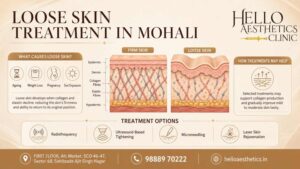
Radiofrequency Skin Tightening
Radiofrequency treatment uses controlled energy to heat targeted layers of the skin. This may support collagen remodelling and gradually improve the appearance of firmness.
It may be considered for areas such as:
- Face and jawline
- Neck
- Abdomen
- Upper arms
- Thighs
Patients may require multiple sessions depending on the device, treatment area and severity of laxity. Temporary redness, warmth or mild swelling may occur after treatment.
Ultrasound-Based Skin Tightening
Ultrasound-based procedures deliver focused energy below the skin’s surface to support collagen production. They may be considered for selected patients with mild laxity around the face, jawline or neck.
Results are generally gradual because collagen remodelling takes time. The degree of improvement can vary from one person to another.
Microneedling
Microneedling creates controlled microchannels in the skin to encourage its natural repair response. It may help improve mild laxity, fine lines, enlarged pores, uneven texture and selected acne scars.
Temporary redness, sensitivity or mild swelling may develop after a session. Following the recommended aftercare is important for proper recovery.
Radiofrequency Microneedling
Radiofrequency microneedling combines controlled microchannels with radiofrequency energy delivered at selected depths. Depending on the patient’s condition, it may support collagen production while improving mild skin laxity and texture.
Multiple sessions may be recommended based on the treatment area and desired outcome.
Laser-Based Skin Rejuvenation
Selected laser procedures use controlled energy to support collagen remodelling and improve skin texture. Laser treatment may be considered for certain areas of the face or body after assessing the patient’s skin type, sensitivity and pigmentation tendency.
Some patients may need a series of sessions, with results becoming visible gradually.
Dermal Fillers for Volume Loss
Facial sagging is not always caused by loose skin alone. Age-related volume loss in the cheeks or other facial areas can make the skin appear less supported.
For suitable adults, carefully planned dermal fillers may help restore selected areas of volume and improve facial balance. However, fillers do not remove excess skin and are not appropriate for every patient.
Personalised Combination Treatments
Some patients have several concerns, including loose skin, volume loss, fine lines and uneven texture. A carefully planned combination of treatments may be recommended instead of relying on one procedure.
The sequence and interval between procedures should be personalised to support safety and avoid unnecessary treatment.
How Is the Right Treatment Selected?
During a consultation for Loose Skin Treatment in Mohali, the doctor may assess:
- Location and severity of laxity
- Skin thickness and elasticity
- Age and general health
- History of pregnancy or weight loss
- Previous aesthetic procedures
- Current medicines and medical conditions
- Tendency to develop pigmentation or scars
- Expectations and acceptable downtime
This assessment helps determine whether a non-surgical procedure may provide suitable improvement or whether a surgical consultation is more appropriate.
Patients should inform the doctor about pregnancy, breastfeeding, active skin infections, implanted medical devices, blood-thinning medicines or a history of abnormal scarring before undergoing treatment.
Benefits of Loose Skin Treatment
When selected appropriately, non-surgical treatments may provide benefits such as:
- Improved appearance of mild skin laxity
- Better-defined facial or body contours
- Support for natural collagen production
- Improvement in skin texture and firmness
- Minimal or manageable downtime
- Gradual and natural-looking changes
- Personalised treatment for specific areas
Non-surgical procedures cannot produce the same degree of change as surgical skin removal. Therefore, maintaining realistic expectations is important.
What Results Can You Expect?
Results depend on the selected procedure, severity of laxity, age, skin quality and treatment area. Most non-surgical procedures provide gradual and moderate improvement rather than an immediate or dramatic lift.
Visible changes may develop over several weeks or months as collagen remodelling occurs. Some patients may need multiple sessions followed by maintenance treatments.
A responsible practitioner should explain the potential improvement and limitations before treatment rather than guaranteeing permanent or identical results for every patient.
Aftercare Recommendations
Aftercare requirements vary according to the procedure. General recommendations may include:
- Using gentle skincare products
- Applying broad-spectrum sunscreen regularly
- Avoiding direct sun exposure and excessive heat
- Not rubbing or exfoliating the treated area
- Maintaining adequate hydration
- Following the prescribed skincare routine
- Avoiding strenuous exercise when advised
- Attending scheduled follow-up appointments
Contact the clinic if you experience severe pain, blistering, signs of infection, prolonged swelling or another unexpected reaction.
Consult Dr. Kriti Singh at Hello Aesthetics Clinic
Choosing the right clinic is important for safe, informed and personalised care. Consider the practitioner’s qualifications, treatment experience, hygiene standards and consultation approach before beginning any aesthetic procedure.
Dr. Kriti Singh at Hello Aesthetics Clinic carefully evaluates the cause and severity of skin laxity before recommending a suitable plan. Patients receive information about the procedure, expected results, possible downtime, number of sessions and necessary precautions.
A professional consultation can help determine whether a non-surgical procedure is appropriate for your concern or whether another treatment approach should be considered.
Frequently Asked Questions
1. Which treatment is suitable for loose skin?
The appropriate treatment depends on the affected area and degree of laxity. Options may include radiofrequency, ultrasound-based tightening, microneedling, radiofrequency microneedling or selected laser procedures after a professional assessment.
2. How many sessions are required for loose skin treatment?
The number of sessions depends on the chosen procedure, treatment area and individual response. Some treatments may require one session, while others work through a planned series followed by occasional maintenance.
3. Can loose skin be tightened without surgery?
Mild to moderate skin laxity may improve with suitable non-surgical procedures. However, the results are generally gradual and moderate. Significant excess skin, particularly after major weight loss, may require evaluation by a qualified plastic surgeon.
