
Acne can leave behind more than temporary breakouts. After active acne heals, some people develop uneven skin texture, depressions, or visible changes in the skin surface. These changes can remain for a long time and may become more noticeable under certain lighting.
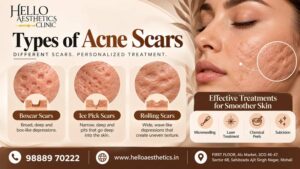
Acne scars are not all the same. Boxcar, ice pick, and rolling scars are three common types of depressed acne scars, and each has distinct characteristics. Understanding the type of scar is an important first step when considering professional care.
If you are searching for Acne Scar Treatment in Mohali, knowing how these scar types differ can help you have a more informed discussion during a skin consultation.
What Are Acne Scars?
Acne scars can develop when inflammation from acne damages deeper layers of the skin. During healing, the skin produces collagen to repair the affected area. If collagen production or organisation is uneven, a depression or change in skin texture may remain.
The risk of scarring can be higher with deeper or inflammatory acne. Picking, squeezing, or repeatedly irritating pimples can also increase inflammation and may contribute to scarring.
It is important to distinguish acne scars from post-inflammatory hyperpigmentation (PIH). PIH appears as a flat area of altered skin colour, while an acne scar generally involves a change in the skin’s texture or contour.
Understanding the Different Types of Acne Scars
The three commonly recognised types of depressed acne scars are boxcar scars, ice pick scars, and rolling scars. Some individuals may have more than one type, making professional assessment particularly useful.
1. Boxcar Scars
Boxcar scars are broad depressions with relatively defined edges. They can appear round or oval and may be shallow or deeper.
Because of their defined borders, boxcar scars can create noticeable shadows across the skin, particularly under direct lighting. Their appearance and depth can vary from one area of the face to another.
Understanding whether boxcar scars are shallow or deep is important when assessing the overall severity of acne scarring.
2. Ice Pick Scars
Ice pick scars are narrow but generally deeper depressions that can give the skin a small, pitted appearance. They often look like tiny openings in the surface of the skin.
Although their surface opening may be small, they can extend deeper into the skin. This makes ice pick scars distinct from wider and shallower types of acne scarring.
3. Rolling Scars
Rolling scars are broader depressions with smooth, sloping edges. They can give the skin a wavy or uneven appearance.
Rolling scars may become more noticeable when light falls across the skin because the uneven surface creates shadows. They can also occur alongside boxcar or ice pick scars.
Can You Have More Than One Type of Acne Scar?
Yes. Many people have a combination of different scar types rather than only one.
For example, a person may have rolling scars on the cheeks along with smaller boxcar or ice pick scars. Acne scars can also occur together with redness, pigmentation, or other post-acne changes.
This is why Acne Scar Treatment in Mohali should ideally begin with an assessment of the skin rather than assuming that every scar requires the same approach.
Why Does Acne Scar Type Matter?
The appearance of an acne scar depends on several factors, including:
- Depth of the scar
- Width and shape
- Defined or sloping edges
- Location on the face
- Overall skin texture
- Presence of multiple scar types
- Skin tone and individual healing response
A shallow boxcar scar is structurally different from a narrow, deeper ice pick scar. Similarly, rolling scars may have a softer and more undulating appearance.
Because of these differences, a personalised evaluation is important before deciding how to manage acne scarring.
Acne Scars vs Acne Marks: What’s the Difference?
Acne marks and acne scars are often used interchangeably, but they are not the same.
Acne marks are generally changes in skin colour that remain after an acne lesion has healed. They may appear darker, redder, or otherwise different from the surrounding skin.
Acne scars involve a structural change in the skin. Boxcar, ice pick, and rolling scars are examples of depressed acne scars.
Colour changes may gradually become less noticeable, while established textural scars can persist for much longer.
When Should You Consider an Acne Scar Evaluation?
A professional evaluation can be useful if you have:
- Persistent depressions in the skin
- Uneven facial texture after acne
- Deep or noticeable scars
- Multiple types of acne scars
- Uncertainty about whether you have scars or acne marks
- Active acne together with older scars
- Concerns about how acne scarring affects your confidence
It is also important to manage active acne because new breakouts can contribute to additional inflammation and potential scarring.
Acne Scar Treatment in Mohali at Hello Aesthetics Clinic
At Hello Aesthetics Clinic, acne scarring is assessed according to the individual’s skin condition and the characteristics of the scars.
Dr Kriti Singh provides personalised skin and aesthetic care, with attention to the individual’s concerns, skin condition, and expectations. During a consultation, the appearance and type of acne scars can be assessed to help you better understand your skin.
If you are looking for an Acne Scar Treatment in Mohali or a Best Skin Doctor in Mohali, professional evaluation can help you understand whether your concerns are related to boxcar scars, ice pick scars, rolling scars, pigmentation, or a combination of post-acne changes.
The goal of an assessment is not to treat every scar in exactly the same way, but to understand the individual skin concern before discussing suitable options.
How Can You Reduce the Risk of New Acne Scars?
Preventing new acne scars starts with managing active acne and avoiding unnecessary trauma to the skin.
Some helpful habits include:
- Avoid picking or squeezing pimples.
- Do not scratch active breakouts.
- Follow a consistent skincare routine.
- Avoid using too many harsh products at once.
- Seek professional advice for persistent or inflammatory acne.
- Protect your skin from excessive sun exposure.
Picking and squeezing acne can increase inflammation and may raise the risk of scarring.
What Should You Expect During an Acne Scar Consultation?
A consultation generally begins with an assessment of the skin and the appearance of the scars. The type, depth, location, and overall condition of the skin may be considered.
It is also useful to discuss your concerns, expectations, previous skincare or procedures, and whether you continue to experience active acne.
A professional assessment can help differentiate between boxcar, ice pick, and rolling scars, as well as post-acne pigmentation or other skin concerns.
Conclusion
Acne scarring can have different appearances, and understanding the type of scar is an important part of evaluating the skin. Boxcar scars have broader, defined depressions, ice pick scars are narrow and deeper, while rolling scars generally have wider, softer depressions.
If you are considering Acne Scar Treatment in Mohali, a professional skin assessment can help you understand the type of scarring you have and what factors may be relevant to your individual skin.
At Hello Aesthetics Clinic, Dr Kriti Singh focuses on personalised skin and aesthetic care, helping individuals understand their post-acne skin concerns through an individualised consultation.
Frequently Asked Questions
1. What are the main types of acne scars?
The three commonly recognised types of depressed acne scars are boxcar, ice pick, and rolling scars.
2. Can someone have more than one type of acne scar?
Yes. It is common for different types of acne scars to occur together, particularly across the cheeks and other areas affected by previous acne.
3. Are acne marks and acne scars the same?
No. Acne marks generally refer to changes in skin colour, while acne scars involve a change in skin texture or structure.
4. Can acne scars be prevented?
Early management of inflammatory acne and avoiding picking or squeezing breakouts can help reduce the risk of developing new scars.
5. Should active acne be addressed before evaluating acne scars?
If active acne is still present, managing ongoing breakouts is important because new inflammation can contribute to additional scarring. A professional consultation can help determine the appropriate next steps.
